Showing posts with label QUILLING. Show all posts

February 22, 2009

HOW TO QUILLING..?

The fun of twisting paper into a beautiful piece of work is fun. The main technique is by using two types of tight coils, ring and solid coils. The simple use of coils and twisted papers can create all so many cute characters.

Quilling is a paper craft, specifically the art of rolling thin strips of paper around a needle-like tool, then shaping those coils into intricate shapes and designs.

Things you needed:

- strips of paper of varying colors.
- a slotted quilling tool.

- white glue.
- a toothpick.
- scissors.
- a ruler.
STEPS:

1.Insert the end of the paper into the slot of the quilling tool.
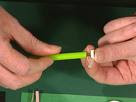

2.Turn the slotted tool towards you. Place your thumb or index finger at the very tip of the slotted tool.This will prevent the paper from slipping off the tool.Use the other fingers to guide the strip of paper so that it rolls into an even plug (called a tight coil).

3.When done, turn the slotted tool a quarter turn away from you. Pull the plug out of the slotted tool. Hint.The coil comes off the tool neatly if you pull the coil off the tool and not pull the tool out of the coil.

4.Use a toothpick to apply a small smidgen of glue onto the free end of the tight coil. Use your finger, a clean toothpick, or forceps to press the free end onto the coil

5.When dry (about 5 seconds), you will have a tight coil. These can be used to make flowers, grapes, eyes and more.

If you have never seen paper quilling before, prepare to be amazed at the intricate and beautiful designs you will see.

QUILLING HISTORY...

Quilling, or paper filigree, is an ancient art that is slowly being revived after almost dying out at the end of the 1800's.

It is believed Quilling has been practiced since ancient Egyptian and/or 4th Century Grecian times. Although they obviously would not have used paper in the 4th century, it is believed the Greeks used thin metal wires to decorate containers, especially boxes, and Egyptian tombs have been found containing similar wire shapes akin to modern quilling.

While some sources speculate that quilling originated in Ancient Egypt, others connect the craft with the invention of paper in China around 105 AD. In any case, the first known quillers were members of cloistered religious orders in Europe during the Middle Ages who used individual bird quills as a rolling tools. Later on, 15th-century nuns collected gilt-edged parchment that fell off bibles to quill decorative designs for medallions. With the wider availability of paper, French and Italian nuns achieved more intricate work in the 16th-and 17th-centuries, decorating relics and religious images with quilling as ornamnetation. Walls and altars of poorer churches displayed these icons and backgrounds quilled with gilded or silvered paper, mostly indistinguishable from genuine gold or silver filigree work.

In the late 18th- through 19th-centuries, Quilling became more popular as paper became less expensive and more widely available. As it became popular for decorative crafts, it was thought to be a suitable hobby for popular ladies and "ladies of leisure" in England. From there, the hobby was brought to the American Colonies and to New England.

For unclear reasons, quilling's popularity faded during the late 1800s and failed to make a resurgence until the 1950s, sometimes deccorating paper greeting cards or adorning framed documents. Without preservation, quilling is just as fragile and fleeting as other paper crafts.

Many museums around the country and abroad have examples of antique work either on display or stored behind the scenes.With the introduction of modern paper and techniques, Quilling is currently enjoying a wall deserved revival.

February 11, 2009

QUILLING

Quilling or paper filigree is the art of rolling thin strips of paper into different shapes and gluing the shapes together to form decorative designs
The paper is wound around a quill to create a basic coil shape and then glued at the tip and the coil shaped, these shaped coils are arranged to form flowers, leaves, and various ornamental patterns